Showing posts with label ultrarunning. Show all posts

Saturday, April 2, 2016

My recovery story for AIIA


I had the unexpected honor of being chosen as Addict II Athlete MVP of the month, and was asked to write my recovery story. So I'm posting it here as well. I love AIIA and feel privileged to be a part of this team. The bonds, connection, and friends I've made are priceless. 


Addict II Athletes MVP of the month goes to: 
Congratulations! Here's a little about
My name is Tara Workman-Tulley licensed clinical social worker, and licensed direct-entry midwife. My passion is in addressing addiction, eating disorders, and maternal mental health. I believe that to really heal addiction, violence, mental and physical illness we have to start with addressing mental health before, during and after pregnancy. I’m fascinated with the emerging field of neuroimmunology showing the imprint that stress and adverse childhood experiences  during gestation and early childhood  impact not only the rates of addiction in offspring, but in altering DNA to make the net generation more at risk for the same illnesses. By addressing maternal mental health, we not only are helping the life of the mother and her child, but we are helping to mitigate the effects of generational stress and trauma and hopefully altering DNA in a good way that will make the next generation less prone to these diseases. 

My story is long and complicated, so I will attempt to write the cliffnotes version. I experienced quite a bit of trauma in my early childhood, and I am the oldest child of 8 siblings. My parents did the best they could to raise us to be healthy, productive adults, but there were many things outside of their control that impacted us as children. By the time I was 10-11 years old, I remember being depressed and feeling ashamed about my body. Although I am not a tall adult, I gained most of my height early, and I developed as a young women starting at the age of 9. I was shamed for my body size because I was taller and more developed than my peers. By the time I was 11 years old, I was obsessed with figuring out how to become anorexic. My drug of choice was never a chemical substance, I didn’t like feeling out of control, and so controlling my food, exercise, and weight became my drug of choice. 

When I was 14-years old, I remember sitting in a health class at school, and watching very sensationalized documentaries on emaciated women, showing how much they ate, how they cut up their food, how they over exercised, took laxatives, and vomited after eating to control their weight and size. Unfortunately, instead of making me afraid of anorexia, even with showing pictures of Karen Carpenter before her death, I felt like I was connected to those women. In a weird way, I looked up to them for their ability to have so much self-control. It was from that moment that something snapped in my brain, and my deadly dance with Ed (Eating Disorder) began. 

Sadly, the symptoms of my disease were encouraged by the adults around me. I quickly lost weight. I felt like I had really accomplished something. The fact that I could go all day on a few hundred calories, hide the fact that i wasn’t eating, run for miles in the middle of the night, or wake up at 3-4am to exercise for 2 hours before school, and rapidly lost weight was encouraged by all of the adults around me. I was congratulated for my success, and for making my body conform to super-model status. As is the case with many women with anorexia, starvation can only be maintained for so long. After about 9-10 months, the brain can’t take it anymore and suddenly i found myself eating through abnormal amounts of food in the middle of the night, and then spending the next couple of hours over the toilet vomiting. I begin to punish myself for these episodes, but increasing my self-exercise abuse. This progressed to vomiting almost every time I ate, even if I had eaten just a little. I found myself running to the bathroom after every class, just to make sure there was nothing left in my stomach. It got so bad, that I started vomiting blood, but I never told anyone. Additionally I started taking laxatives in high amounts, to ensure that all of the calories left my body. 

I hated myself, and what I had become, but after 2 years of this, I was not able to stop. I became suicidal and hopeless, and sometimes would cut on myself. Finally, I was brave enough to tell my parents, I don’t think they knew how to react. My mom’s reaction was “i don’t think you are really bulimic, this is just a phase or cry for attention”. For a while it got worse after I told, my mom didn’t know how to handle Ed, and Ed became the contention of everything. When large amounts of food would disappear, she would yell out of desperation that I was wasting money and disrespecting the work that went into making the food. She was doing her best, but didn’t understand my addiction, and neither did I. Finally, it got bad enough that my parents sought help for me. I was mad, I didn’t want to see a therapist, I wasn’t crazy. But I went. Unfortunately the therapist I saw for the next 15 months made things worse, and did some very inappropriate things that harmed me and lead to more trauma. 

One day, when I was 17, I thought I had spontaneously recovered, I became a strict vegan, and stopped throwing up, but didn’t realize I was just finding a more socially acceptable way to have an eating disorder. This went on for a while. When I was 17.5 I was raped, and it sent me back down into a bad depression. I was afraid to see a therapist because of my previous experience, but a friend pushed me into trying it one more time, and luckily I found a good therapist, that helped me to get my life back online for about 9 months. I thought I was done, but i really hadn’t addressed all of the trauma and distorted thinking I had. She moved away at that point, and I got engaged. I traded Ed for obsessing about how I was going t be the perfect mother, and wife, and not have to ever think about the bad stuff again. 

Then I got pregnant. The first two trimesters were fine, but beginning my third trimester I started to have severe anxiety, and didn’t know but I was experiencing what is called perinatal OCD. I had crazy thoughts and fears that when on in my head on repeat, and got worse as the pregnancy progressed. I had a difficult but natural home-birth, and thought i was finally in a good place. But then 5 days after my daughter was born, I found myself in a deep depression, and my OCD thoughts worsening. I thought I was psychotic, and felt that I had failed as a mother. But i didn’t want everyone to know I was crazy. So when she was 10 days old, without telling my husband or anyone, I registered for midwifery school. For the next two years midwifery school became my addiction, and my way of avoiding addressing my emotional state. Then 19 months later my son was born, my symptoms worsened during and after his pregnancy, and I was near the end of my schooling, and had less t distract me. 

When he was 2 months old, a great-aunt called me fat, and it sent me into a downward track. Because I no longer had school to distract me, i started going to the orem rec center and dropping my kids off for the maximum 4 hours i could leave them in the day care because i was afraid i was going to hurt them, and i worked out that whole time. I was also running morning and night when my husband was home. I started taking dangerous amounts of diet pills, and lost a lot of weight. And then when he was 1 years old, i suddenly came out of it, and had 1 full year that i actually was mentally stable and healthy about my body and food. 

But then I got pregnant with my youngest child, and the OCD and depression returned. It lead me to getting into an unhealthy business partnership. When she was 3 years old, i still wasn’t OK, and I started having traumatic memories come back to me, that I had been avoiding for many years. I started wanting to restrict and vomit again. This time I sought help before acting on my urges, but the therapist I saw was not specialized, and did some things that made the situation worse. I got sicker, and finally relapsed. 

I lost 70 lbs in a three month period, and was running 13-15 miles per day, on very few calories. I would come back from the runs, almost passing out, and my health started to decline. I finally realized the therapy I was in was not helping, and found a therapist who was specialized. 

During my recovery I was met with resistance by dietitians who knew i was running, but my therapist was open minded and recognized that for me, running was not really a part of my addiction, and that running actually provided an outlet that made me feel positive about my body. Running became the catalyst to recovery for me. I started to treat my body better as i begin to run marathons and ultra-marathons. 

In early recovery, running was my replacement for Ed, but as i started to find self-love again, address difficult emotions, and heal trauma, running became just one peice of recovery. Eventually, through a lot of spiritual searching, I found myself back in school, and ended up in a social work program in graduate school. I wanted to understand why running was healthy for me, when most of the eating disordered field looked down on my method of recovery. I started to develop and write out a recovery model, that I didn’t know how to describe to people, and figured out that when I was stuck in Ed, Ed was who I thought I was, and that i had to let go of that identity and re-define who I thought I was. That was painful, and it felt like I was losing a best friend, and a worst enemy at the same time. 

The difficulty with a food addiction, is that I couldn’t not avoid my drug of choice, I had to learn how to cope with food, and fullness. My body had to relearn was hunger felt like. I had to learn to sit through the discomfort of fullness. 

As i have developed professionally, I studied and gained expertise connecting the dots between my pregnancies, and relapses, and recognized there were big holes in treatment and understanding of perinatal mood and anxiety disorders and eating disorder treatment. When i discovered Addict II Athlete, I was instantly connected to it, because it matched my model of recovery that I had found, and I finally found other professionals that understood and supported my path of recovery. The Erase and Replace model, is exactly what I did to move from recovery to fully recovered and alive. 
I have gratitude every day that I am alive, able to run, and love my body no matter what state it is in. I have evolved to be OK when I can’t run, and I know I am a person that is worthy of unconditional love and acceptance. I seek to help other women and men find the same peace i have found through being recovered.

Sunday, August 2, 2015

Kat'cina Mosa 100k race report on DNF


Well, it looks like my finishing streak this year needed a humility check. Reminders that my body should be respected. This is my 7th year attempting Kat'cina, the furthest I've made it on this course is 46 miles. Yesterday I made it 30. 

Having POTS one thing I've learned is that I can never be unwilling to DNF if it is the right thing to do that day. My body has made marked improvements. I finished Squaw Peak this year, and Desert RATS a week apart from each other. 

The heat and grueling conditions at DR were tough on my body. I had an abscessed tooth that started at DR, and ended up with an impetigo infection on my face, not to mention all of the blistering my feet suffered from the heat and sand. I finished officially running in 100-106 temperatures, in barren slick-rock, and I was able to perform and manage POTS the whole time. 

Two days after finishing DR , I drove out to Jackson Hole for a family renunion, and flew out to the Postpartum Support International Conference to speak in Plymouth, Michagin, and ignored the tooth as much as possible because I just had to get through my commitments. 

Flying exacburates my POTS anyway, but having an infection also makes my symptoms worse. When I got home I was behind on work. The other issue was that my former dentist had recently closed his practice after surrendering his license, so I did not have a dentist anymore, and got through work with Tylenol until the pain became so severe, that it became a weekend emergency. 

When I was finally able to get into a dentist I found out the tooth was not only abscessed, but it had spread into my jaw. Thar was fixed a couple of weeks ago, but my energy had been super low, and I've been a little more Potsie the past couple of weeks. 

I'm on the mend, and I started the race at midnight because I knew I was more Potsie this week. I was very proactive at managing hydration, heat, and eating, but my body just didn't seem to have and rev yesterday. I struggled climbing Lightening Ridge, I think I still
Did it stronger and better than I have in years past. I started under a Blue Moon this year! 


But the climb up to Windy Pass I didn't handle as well as normal. A week before Squaw Peak, In June, I did that hike as a training run, overdressing on purpose, and much faster in preparation for DR. 

But yesterday it was just like all the life felt sucked out of me. I think, even though it was nearly 1pm when I reached Windy Pass Aid station, on a good day I could have busted my butt and made the Little Valley cut off, but it just didn't feel right. It wasn't like a normal exhaustion feeling, it was like my body was saying "I'm still on the mend, let me heal".

So I took a deep breath, and found I had cell service, about .25 of a mile before the aid station, and texted my coach my thoughts, that my body was telling me to rest today. I want to be strong, and fully ready for Wasatch 100 in September, my coach is making the effort to come pace me and help me finish Wasatch in September, I want to be able to give that race everything I've got. 

I believe I can finish Wasatch this year, I believe I could have pushed it yesterday and probably have warn myself down more, but it would have compromised my recovery for Wasatch.

So my coach agreed with my assessment, and I informed the aid that I would be walking back 5 miles to Big Springs with them. 

I took a nap on the mountain, I was very tired from starting at midnight. I felt better, and was amazed coming down with the three radio workers. They each carried 70+ lbs up the mountain, where running the radios and helping runners all day long, and then had to haul it all down on there backs. One of the guys was also carrying a solar panel in his hands and struggling without poles because he had to left his in order to carry the solar panel.

I felt bad for him and ended up trading him. I carried the solar panel so he could have my pulls to help him get those 70+ extra lbs down a steep trail, with a lot of loose rocks. 

I have a new respect for those radio guys, and anyone who is willing to work that aid station. Both Kat'cina Mosa and Squaw Peak would not be possible without those people willing to volunteer to run the Windy Pass aid station. Thank you to them and Addict II Athlete who took on that aid station for both Squaw Peak and Kat'cina this year! 


As we were hiking down, and I was carrying the guy's Goal0 solar panel, somehow the conversation led to me mentioning that my dad was the founder of Goal0. The other radio guy, lit up and asked me my dads name. I told him it was Robert Workman, and he got excited! He used to work for Provo Craft until shortly after my dad sold the company, and knew all about Tifie and Goal0 and even had gone to lunch with him and my brother Swan, when they were first developing the concept models for Barebonesliving.com

Small world, it was very fun for me to be able to hike down with the guys running the radio, and to see that side. I started to feel better after a nap, and going downhill, and the temperatures getting cooler, and by nightfall, I was thinking, "I Feel fine, why am I not running right now!" 

But I still feel like I made the right decision, and the fact that I woke up feeling energized, and my legs feel fresh and ready to run this morning is a good sign. I think my body is on the come back, I didn't even feel dehydrated last night or this morning.

I did a combo of drinking about 2x amounts water to of Normalyte solution. I also took about 3 gels per hour. I needed Zofran to help me get through the nausea of the hill climbing. 

I discovered near the top of a Windy that I needed to pull out my bacon jerky, almond, ginger-gummy candy mix I make for my runs, and probably should have been taking ages of those to two gels instead of straight gel per hour. 

It was a good chance to test my POTS nutrition theories for running Wasatch. I've been redining my nutrition/ hydration formula for racing this year. 

I think I got everything mostly right yesterday. The only thing I think I shpu have changed is adding in the fat and protein every hour in addition to the gels. If I intake fat and protein with gels my heart rate and breathing stay more regulated, especially for hill climbing. 

Kat'cina Mosa is the ultimate race to test this on, because the hills and trails of Kat'cina are tougher than Wasatch.
The climb to Francis peak at Wasatch feels like a walk in the park compared to the climbs to Lightening Ridge and Windy Pass at Kat'cina. Perhaps it is because I do this race four weeks before Wasatch and it helps me be in prime condition for the Wasatch climbs, but I really think the trails are more technical as well. 

The fact that the day after, I have few Potsie symptoms than the day before I did Kat'cina is a good sign that I'm getting good at understanding my nutrion needs and hydration needs.

This is the basic formula 

For every hour of activity, and during each hour 

1. Drink 4-8 ounce of Normalyte Solution (depending on the outside temperature and elevation), even in very hot temps the solution is high enough in sodium and potassium that more than 1/2 a litter is too much. I mix the power into two 16oz bottles. So one packet will last me 4-8 hours of activity. 

2. I take 2 hammer gels per hour. I hate the texture of gels, I have to wash them with water to not gag on the texture, but the formula hammer uses in their gels seems to work best for my body. 

3. Eat 10-15 almonds, a few peices of bacon jerky, and a few peices of ginger gummy candy. 

4. Drink water as needed, and I have to drink about 2x the ammout of water to the Normalyte mix to keep it balanced. 

5. I have a cooling, headltube clothe, this is essential for keeping more core temp down. 

6. I have a prescription for Zofran. Hillclimbing is more difficult with POTS,
In ways that it isn't difficult for other people. I'm more prone to stomach issues than other people when it's hot, steep hills, and I'm exhausted. Zofran allows me to keep eating and it reduces the other POTS symptoms when I can keep up with fluids and nutrition. 

7. Trail toes and Injinji socks= no blistering yesterday!


All in all it was a good experience, good training, and I woke up feeling refreshed and confident about Wasatch 100. 


Saturday, September 13, 2014

Race to 100 for Dysautonomia International $10 per mile

Many individuals suffer from chronic invisible illnesses like mine, Postural Orthostatic Tachycardia Syndrome. I'm blessed because I've been able to mitigate or minimize many symptoms, and I am able to run and function normally (although it has taken a lot of effort in healing!) But at least 25% of individuals with POTS can not function normally and many had to end careers and some are bedridden. Help find a cure for dysautonomia by donating to my race for 100 campaign to support research and treatment for those suffering from this hidden, chronic illness.

I've officially joined Team Dysautonomia and wish to raise $10 for every mile I race for the remainder of 2014 and 2015

https://www.crowdrise.com/Raceto100forDysautonomia

Wasatch 100, 2014 race report

October is Dysautonomia Awareness Month! Please consider a donation to Dysautonomiainternational.org. I'm grateful I can run, because 25% of those struggling with POTS are significantly impared by their illness, and I'm in the 50% that still is struggling more than 4 years after being diagnosed. I'm seeing improvements, but many people struggle the rest of their lives. 


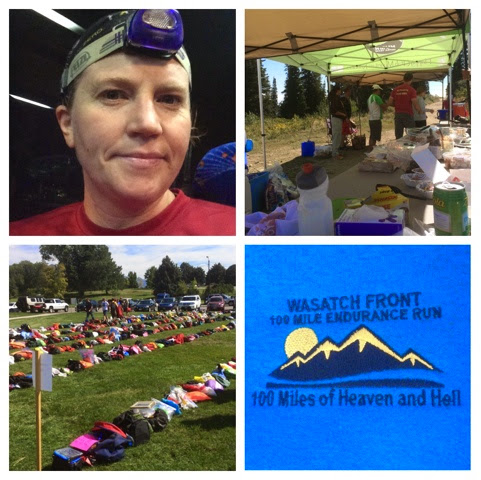
It was a temperate Thursday afternoon on September 4 th, as I pulled into Sugarhouse park like I have in years past. Here it was again, the prerace briefing of the Wasatch 100, one of the toughest 100 mile races in the Rocky Mountains.

Think back to 2010, my first attempt at Wasatch 100, just 3 months after being diagnosed with Postural Orthostatic Tachycardia Syndrome (POTS). That year my body was in peril and I was in trouble with my hydration by the time I hit Francis Peak aid station at mile 18.4, just 20 minutes before the cut off. DNFing that year was the right thing to do, my body just wasn't functioning properly enough, and I had had some trips to the ER and many days in bed unable to move. 

The second attempt occurred in 2012, this time still not fully working and a months after a hystorectomy I made it not even all the way to Francis peak 1 full hour after the cut off. 

Discouraged and defeated I decided not to start in 2013 and instead helped run aid at Pole Haven, and decided that I would train much harder for 2014, and work with Lisa Smith-Batchen on improving my running prognosis. Starting in January I finished a snowshoe 50K, and then 62 miles of Buffalo 100 in March, and then Squaw Peak 50 miler (which I had not been able to finish since 2010), and then Deseret News Marathon,  38 of Kat'cina Mosa 100k, and finally Wasatch 100 came. 

I knew that the first 18 would be tough for me because of POTS, my heart rate goes up too much on hill climbs, and it slows me down, but I kept a slow and steady pace and reached Francis Peak aid Station at mile 11:41, 19 minutes before the cut off. Feeling good, and moving on I continued to Swallow Rocks at mile 35, and made the decision to drop when it was 7pm, and I still had 4.5 miles to Big Mountain and would not make it before the cuttoff at 7:30pm, my decision to drop at Swallow Rocks was of courtesy to the aid workers to not have to wait for me when I was going to time out anyway, and because I'm running another 100miler, Yellowstone/Teton 100 on September 20-21.

I feel very good after Wasatch and recovered quickly, and am feeling confident about a finish for YT100, because I am much faster on road, and not as many steep hill climbs. 

I'm hoping to return to Wasatch in 2015, and with another good year of training have a finish! 

One thing that has been helping lately is I started taking q96, and have noticed: better tolerance to heat, my heart rate is more stable, I have a lot more energy overall,  and I have stopped taking 2 of the medications I was on to control my POTS symptoms. 

All in all, I feel hopeful because I doubled my distance at Wasatch this year , and am on my way to finishing it! 


Tuesday, August 5, 2014

Ultramarathon Running and Postural Orthostatic Tachycardia Syndrome(POTS)


Running Ultramarathons with POTS: Recovering Strength and Endurance

By: Tara Tulley LDEM, LCSW

A few individuals have asked me lately how I have been able to continue running with POTS (Postural Orthostatic Tachycardia Syndrome). I decided I would write my story on how I discovered I had this condition, how it has affected my life, and how I have decided to run anyway.

In 2007 I completed my first marathon, Deseret New Classic Marathon on July 24th. At that time I was also recovering from a long-term eating disorder, and was warned repeatedly that running would kill me. I found the opposite to be true; I found that running was the catalyst that changed how I viewed my body. I started to respect my body and appreciate the abilities that it had to endure, and through a long journey now consider myself fully recovered from an eating disorder, and no longer struggle with the daemons that kept my head bound for many years. Two months after completing my first marathon, I decided to run in the Top of Utah Marathon. I loved running distance so much, that I wondered how many other marathons there were around Utah, and it was then I was introduced to the world of the Ultramarathon.


In October of 2007, I ran and completed the Ogden Valley 50 miler. No one thought I could do it, I had only run two marathons, and had not done much distance training before that summer.  I not only completed a 50 miler, but also discovered that I was not as tired and sore after running 50 miles as I had been running marathons.

In fall of 2007, I also decided to return to school. I had been a practicing midwife in Utah for about 8 years, and had been politically active in passing legislation to license midwives. When I went back to school, I initially thought I would complete another bachelor’s degree that would get me into a Nursing program, with the eventual goal of becoming a nurse practitioner. Somehow that plan changed and I ended pursuing a degree in social work, and a Masters degree at the University of Utah. 


In 2008, I decided to take things a step further. I signed up for the Utah Grand Slam, completing 5 marathons in a 4-month period, and also completed two 50-mile races. I also starting training in Mauy Thai, and started participating in local smoker bouts.

In 2009, my speed was getting better, I signed up for more challenging mountain races. It was during an attempt at the Kat’cina Mosa 100K that I started noticing some odd things about my running. Mountain racing was a different ballgame than road running. In the heat of the August summer, I ran out of water on a difficult 9-mile stretch of the race, and became seriously dehydrated. Making it difficult to traverse down the mountain I experienced dizziness, hallucinations, and made it to the aid station 1 hour after the cut off time. I was completely defeated and demoralized, because it was my first time not being able to finish a race. Brushing it off to poor planning with hydration, and 100-degree temperatures I thought it was a fluke. I attempted the Bear 100 miler in September that year, and again had the dehydration issue and had to drop at mile 45.


During the fall of 2009 I started my Masters program at the University of Utah. I would typically awake at 5am and drive to Salt Lake City to beat traffic, and arrive early at school. I would then go for an early morning run, sometime meeting my brother, Swan, at his training gym (he was working as an elite triathlete coach), and we would run around Sugarhouse Park, and then I would run back to school. I would spend a long day at school and then go home. The days I was not in school, I was working as an intern at the Utah County Justice Center, and also spent long days at that practicum. During the in-between hours I studied and sometimes slept.

In April of 2010, I decided to go down to the Grand Canyon with Jim Skaggs and Brian Beckstead to run the Rim-to-Rim-to-Rim challenge. We started at Bright Angel Trail on the South Rim early in the morning, and made our way to the North Rim. I was able to keep up with them for the first 19 miles, but around mile 17, when the heat of the day started hitting, I started feeling very sluggish and sick. At mile 19, at the beginning of the assent to the North rim. I had to stop, and I could no longer keep up with the boys. After lying down to take a short nap, I felt better enough to slowly climb the North Rim.  I was about ½ mile from the top when they passed on their way down, and I felt OK by then, so I told them to go on, and I would return at my own pace.

During the day I had been taking about one Scap (300mg or so) of Sodium per hour, and eating mostly Lara Bars and gels. On the way down I started feeling week, but not horrible yet. When I was about 7 miles from Phantom ranch, I started feeling sick, and was running out of food. I had not understood how much I needed to carry for a self-supported run. I made it to Phantom ranch just after dark, and was able to sneak into the store to buy a few items.

After crossing the bridge at the Colorado River, I crashed. I was dizzy and weak, and slowly made my way up the 9-mile stretch, and finally made it out of the canyon about 3am. I was out of Scaps, out of food, and no stores are open in the Grand Canyon at 3am. I quietly drove back to the campsite, and in the morning found Brian, who had come down with me, and he had to drive my van back the 10 hours to Utah. I experienced hyponatremia and it was a very scary experience. I almost passed out several times when I would stand up and my ears were ringing. I think I ate a whole plate of bacon, and could not even taste it because I was so depleted of sodium. It took me about 3 days of hydrating and drinking sports drinks before I could taste normally again.

In May of 2009 I attended a Global Eating Disorder Conference, and listened to a presentation by Dr. Elizabeth Joy. After hearing her presentation, I knew she might be able to figure out what was wrong with me. I had started experiencing other strange symptoms after the Grand Canyon run. I started having issues with my blood sugar. Any time I ate carbohydrates, my blood sugar would spike to 200-300 on a glucometer reading and then return to normal within 90 minutes.  I also started dealing with increasingly extreme fatigue. By the time that I ended the May 2010 school year I could barely get out of bed. Some days, I would sleep most of the day, and still be tired. Moving was a surreal experience, sometimes I felt like I was not even connected to my body. After seeing Dr. Joy in June, she immediately suspected that I had POTS syndrome. She ran several blood tests on me, and the only one that came back positive was a norepinephrine test showing that I had a pretty good case of androgenic POTS. Dr. Joy told me that what I was doing, running (to increase my blood circulation), increasing salt intake, and caffeine 100mg in the morning was about the best I could do for POTS, and she discouraged me from using a Beta Blocker, which is used in some POTS patients, because she was afraid it would interfere with my distance running.

At the time I was working with a sports nutritionist, and so we started a painstaking process to unravel how to keep my body functioning and able to run.  I was able to complete one 50 miler in June, by putting scaps in my hydration pack and drinking Coconut water. During that race my nutritionist told me to try taking 1500mg of sodium per hour, which was about twice what is recommended for a normal person. I completed the race, but still had difficulty and was still hyponatremic after the race. After that race I ended up in the ER three times needing IV fluids to stabilize, and having more blood sugar issues. For about a month I could barely get out of bed. But I kept forcing myself to move. When you have POTS, every morning when you wake up, it’s like you have the flu. The one way to get over the symptoms for me was to make myself move past it and get my blood circulating, then the flu symptoms would be not as bad when I was moving. 

My nutritionist had me increase both my potassium and sodium intake to 10000mg potassium daily and 5000mg of sodium daily on days I was not active. In the mean time I worked with my Uncle, Dr. Kory Branham, who believed my POTS was likely tied to my adrenal gland function, especially given the blood sugar issues I was having. This was a plausible theory, as my paternal grandmother suffered from Addison’s disease. Over a couple of months of taking a lot of supplements and slowly making myself return to exercise, I was able to reduce my need for sleep to 12-14 hours per day instead of 20 hours per day, and I attempted a couple of races.

The next race, 2010, was the Speed Goat 50K. My nutritionist had me taking 3000-5000mg of sodium per hour in the heat at this point. This was helpful for my energy and hydration, but not good for my gastrointestinal system, and so I made it about 22 miles of that race with severe GI issues.


In August of 2010 I again attempted Kat’cina Mosa. I started out OK following the high sodium regimen, but on the most difficult climb of the race, suffered a severe hyperglycemic episode. I had taken an Ensure before the climb, and about half way up started feeling dizzy and seeing yellow half moons in one of my eyes. I had to stop for about 30 minutes, and wondered if I was having a stroke. I recovered, and made it to the checkpoint at mile 23, and went on to barely make the cutoff at mile 41 at the Little Valley Aid station. At Little Valley, I again drank another ensure, and within 30 minutes started having blood sugar issues again, this again slowed me down, and I had to quit at mile 46. What I discovered is that fructose, especially high fructose corn syrup is not tolerated by my body during long events.

After Kat’cina Mosa, my body was very tired, and I started my second year of graduate school demoralized, and sick. I could no longer keep up with the early morning trainings before school, because I was too tired. I needed at least 12 hours of sleep per night. I managed to struggle my way through Grad school, I attempted the Wasatch 100 in September, but had to drop at mile 18, and it was the most difficult year of POTS in 2010-2011. However, slowly but surely with perseverance and strict adherence to nutritional needs, I started to be able to do things again, and tolerate running. In January of 2011, even though I was still pretty sick, I was able to summit Mount Kilimanjaro, and completed a Snowshoe 50K that same month.

I graduated with my MSW in May of 2011, and tried a 50 miler, but suffered a stress facture and dropped at mile 25. The rest of the season I was out for running. I did, however complete 45 miles of a 100 miler in October of that year. In February of 2012, I underwent a partial hysterectomy. That year of running was a wash, because it took 12 months for my abdominal muscles to strengthen, and I could barely keep a power walking pace. However, I experienced an unexpected benefit of some of my POTS symptoms decreasing in severity. I slowly started improving, and by summer of 2013, I was able to slowly finish 30 miles of a 50 miler.

I again attempted Kat’cina Mosa 100k in 2013, but experienced a panic attack on the course, and dropped at mile 13. I realized on that course that I had experienced so many set backs from racing, that I was having PTSD symptoms on races about DNFing, and as a result DNFing. So in September of 2013, I connected Lisa Smith-Batchen about couching, and working through my running anxiety. My body was working better, but my anxiety was pulling me down.  I was able to complete 50miles on Lisa’s race in 2013, and completed a 50K a week later.  Another challenge that came with POTS and a hysterectomy, is that despite the fact that I exercise and don’t over eat, I gained 50 lbs. After starting training with Lisa, I’ve been able to drop about 25 lbs, and slowly I finally starting to see my weight come off. That has also taken a lot of nutritional adjustments, and continues to be a challenge.

Through a lot of training and effort, I have started completing ultramarathons again in 2014. In January I completed a Snowshoe 50k, I was slow, but I finished! In March I attempted a 100 miler on Antelope, and was only able to make 62/100 miles, but that was the furthest distance I have ever completed, so it was a win. Then I completed the Squaw Peak 50 in June of 2014, I had difficulty with some POTS symptoms in the heat and was slow after mile 33, but I finished! I ran the Deseret News Marathon again and finished on July 24th. And then there was Kat’cina, I felt OK for the most part, but had difficulty on some of the hill climbs with speed, and my heart rate, and it slowed me down. I was rushing to try to get to the cut off at Little Valley by 4:30, but fell and hurt my back on the way down. I was devastated, because I wanted to finish this year so badly, but reflecting, I realize my speed still is increasing, I did not get dehydrated, and my blood sugar stayed stable.


My next challenge to overcome with POTS is increasing heat tolerance, and increasing my ability to tolerate hill climbs and my speed. I’m hoping Kat’cina helped my body so that I can finish Wasatch 100 this year. The first 18 miles are going to be the most difficult for me. That is the big climb on Wasatch, and that is where I have timed out twice. I plan on doing a lot of heat and hill work in the next 3 weeks, and praying that I make it. It is my dream to complete 100 miles, and it is a bigger dream to beat POTS, be a fast runner again, and win a 100-mile race. As my coach says, “If your dreams don’t scare you, they aren’t big enough”. I know I can do it, I know there is a formula, and somewhere there is a cure for POTS waiting to be discovered. When it is discovered, I’ll be first in line for a cure! I dream of someday, being able to be fast climbing hills again. I visualize it every day. I am faster every year, and yes I still have POTS, but it is not dictating my life.

Some things that I’ve learned from POTS:
Sleep is important. I no longer practice high volume as a midwife because my body doesn’t handle endless nights with no sleep as well as it used to. 

What worked for me may not work for everyone; you should see a doctor who specializes in POTS to determine what is right for you.

Fatigue makes everything difficult, but perseverance out wins fatigue.

Respect your body

Medications: some medication have helped me such as a serotonin–norepinephrine reuptake inhibitor (SNRI). These medications are typically prescribed to treat depression, but with Androgenic POTS SNRIs have help control my norepinephrine response which helps mitigate: dizziness, flu-symptoms, fatigue, and increase blood pressure and circulation. This is what has helped for me, but your case may be different since there are different causes of POTS.

To read more about POTS go to: http://www.dysautonomia